books

The Message of The Quran : By Leopold Weiss [Muhammad Asad]

29 October 2009
‘The Message of The Qur’an’, has been acclaimed as one of the best, if
not the best, translations of the Quran into English. It is a
translation and brief commentary by ‘Leopold Weiss’ [Muhammad Asad] on
the Muslim holy book based on his own knowledge of classical Arabic
and on the authoritative classical commentaries. ,although it has been
criticised by some traditionalists for its Mutazilite leanings. (more…)

Urdu short stories – ‘The Myna of Peacock Garden’

22 October 2009

Published in The Friday Times last week:

A new collection of translated short stories reminds us how Urdu literature needs to connect with a global audience, says Raza Rumi

As I hold the recently published “The Oxford Book of short stories” in my hands, I cannot help bemoan the fact that Urdu literature has been almost invisible from the arena of global literature. Admittedly, translation is difficult; the tediousness of translation daunts many a brave heart. Having said that, there have been a handful of remarkable translators such as Khalid Hassan, Alamgir Hashmi, CM Naim, Aamer Hussain, Umer Memon and Rakhshanda Jalil, to name a few. But a wide corpus of Urdu literature lies forlorn and hidden from global readership, which alas is dominated by English language readers. For this very reason, Amina Azfar has done a remarkable job of compiling a collection of Urdu short stories. Her earlier translations have been competent and quite often lyrical. For instance, Akhtar Hussain Raipuri’s Gard-e-Rahh (the dust of the road) and Sajjad Zaheer’s Roshnai ( the Light ) are noteworthy for their tone.

The book has a nice little foreword by Aamer Hussain, who is correct in stating that Azfar’s collection provides a fine introduction to the genre of the Urdu short story. The stories selected encompass a range of various experiments undertaken by the great Urdu writers. The stark realism of Munshi Premchand is counterpoised by Khaleda Hussain’s two short stories that are allegorical and somewhat postmodern in their sensibility. Iftikhar Arif, the renowned poet-bureaucrat, in his formal introduction quotes Dr Jamil Jalibi, terming the selected short stories “in the category of the very best”. (more…)

The romance of Raja Rasalu

25 September 2009
Book: The Romance of Raja Rasalu and Other Tales
Story telling has been a primordial urge, never quite expressed in its fullest measure, but always lingering and floating like life. There was a sub-continent before the colonial interaction that brought in its wake an aesthetic hardened by the industrial revolution and its uniformity of life and space. This was a world rich with myriad identities, of whispers and tales all interlaced in a peculiarly complex kaleidoscope. Since the 19th century that particular aspect of folk story telling and transfer of generational accounts gave way to what is now known as education and knowledge – instruments and reflections of power and a linear world view set elsewhere but adapted awkwardly to the local context.
This is why Simorgh Women’s Resource and Publication Centre in Lahore, under the leadership of Neelum Hussain, have undertaken the challenging task of reclaiming the rich heritage that lies in our folklore especially that of the Punjab. “The Romance of Raja Rasalu and Other Tales” is a stunning compilation of the romance of Punjab’s legendary hero, Raja Rasalu and, while it draws heavily on the colonial storytellers, the book twists the narrative in a manner that brings us closer to the origins of our cultural sensibilities. The tales are sheer magic. The romance, the intrigue, the bravery and the integrated nature of human existence where it finds communication even with birds and trees comes to a full life throughout the narrative.
It is one thing to produce an admirable compendium but it is another matter to ensure that the purpose and spirit of the tales are adequately reflected in the illustrations. This particular touch of originality is provided by the eminent artist Laila Rehman whose breathtakingly attractive illustrations add a new layer of meaning and sensibility to the folk stories. It is, therefore, as has been rightly stated in the introduction, a book for pleasure: a pleasure that moves beyond the immediate and the momentary and merges into the real or imagined pleasure of living. Laila’s paintings and sketches are evocative enough to generate a parallel story within the larger narrative. It is as if the reader is traversing into several worlds. One minute (more…)

Religion of the heart

9 September 2009
RAKSHANDA JALIL writing here
Sufism, often considered exotic and esoteric, belongs to ordinary people of faith.
Sufism: The Heart of Islam; Sadia Dehlvi, 2009, HarperCollins, p 384
By the early thirteenth century Delhi had emerged as the beating heart of the Sufi movement that had sprung in Central Asia and swept across much of north India. Sultan Shamsuddin Iltutmish (1210-35) had set himself up as the ruler of Hindustan and e stablished his capital at Delhi. Central Asia and Iran had fallen to the Mongol hordes and a virtual exodus had begun — of scholars, holy men and wandering
mendicants. While Ajmer and Nagaur remained important centres of the Chistiya silsila, Delhi was fast gaining popularity as the axis of the Islamic east. And it was to Delhi that they came – to set up hospices, to gather the faithful around them, and to spread the word about a new kind of Islam. In the years to come, the Islam of the Sufis spread (more…)

Le grand historien – (KK Aziz 1927-2009)

5 August 2009

Zarina and KK Aziz, Lahore, 2007

KK Aziz, aged 11 years

Author with the grand historian of Pakistan, 2007

KK Aziz, aged 10 years

KK Aziz at MB high school, Batala, 1941-42

KK Aziz at Government College, Lahore, 1946

It was a humid evening in Peshawar when I found out about the demise of Pakistan’s neglected, grand historian KK Aziz. As it is, visiting Peshawar these days is quite depressing, and this news hit me for its stark, brutal reality. This was the physical death of the historian, for the scholar had already been marginalized from the mainstream of an anti-intellectual Pakistan. Only a week before, I had spoken to Zarina Aunty, his wife, and inquired about Aziz’s health. I am overwhelmed by the regret of not having met him for months, knowing full well how fragile he had been for the past few years.

It had become a routine over the years to meet the historian at his Lahore house and spend long, engaging afternoons duly arranged in advance. Aziz was an old-fashioned gentleman: proper, entertaining and hospitable. It was his wife, Zarina, who was more of a light-hearted character in their lonely house full of books and research materials.

At school, our exceptional history teacher had introduced us to KK Aziz and his writings; and the experience of reading shoddy, deceitful textbooks and Aziz’s reasoned critique was both revealing and entertaining. It was years later when my friend Faheem, with whom I explored history, introduced me to K.K. Aziz. That was a fantastic moment, for meeting Aziz was always a mixed experience: exciting, disquieting and sometimes depressing. He peeled away layers and layers of the ignorance and half-truths that have been so viciously grafted on to historiography by Pakistan’s nervous and irresponsible state.

Khursheed Kamal Aziz, commonly known as KK Aziz, was born to Barrister Abdul Aziz, in Ballambour near present-day Faisalabad on December 11, 1927. KK Aziz’s father was acclaimed as “a historian in his own right” for work on Heer Waris Shah, and in the Urdu work “Woh Hawadis Ashna” KK Aziz elucidates his family legacy and his father’s history.

True to his lineage, Aziz was to pen dozens of historical works and there is little doubt that he shall be remembered for generations of academia and independent scholarship. He was an alumnus of Government College, Lahore, where his tutors included Professor Ahmad Shah Patras Bokhari and Professor Sirajuddin. Later, Aziz became a full professor, and over the years taught courses in politics, history, Islamic Studies and Asian studies at various universities in Lahore, Toronto, Cambridge, Heidelberg and Khartoum. His research interests and capacities were emboldened by this international exposure. However, he yearned to bring back his experience and expertise to his country, but each time the co-joined twins of the Pakistani state and its ‘ideology’ were to harry him. Independence in scholarship is not a trait respected by officialdom, for it tends to promote and honour the cop-outs and the conformists.

Aziz served as an Official Historian to the federal government, Chairman of the National Commission on Historical & Cultural Research, and a Special Policy Adviser to the Prime Minister between 1973 and 1978. In these official capacities, he was characteristically important in the historical definition of Pakistan’s ‘life’ as a nation. In 1978, he was heading the National Commission of Historical and Cultural Research in Islamabad when he was forced to leave Pakistan by Zia-ul-Haq.However, this did not dissuade him from his passion and his academic pursuits.

Even before the draconian Zia era, K.K. Aziz faced various impediments from the state. For instance he related to me how the state censored certain portions of Fatima Jinnah’s monograph “My Brother”, where unsavoury remarks about Liaqat Ali Khan were kept under lock and key lest they demolished the official mythologization of Pakistan’s early leadership. Jinnah in Ziarat apparently had refused to see Liaqat Ali Khan, and only on the persuasion of his sister did Jinnah agree to see him, along with Abdur Rab Nishtar. Jinnah reportedly told his sister that the visitors, on the pretext of inquiring after his health, had come to check how soon he was going to die.

Such flagrant abuse of power and distortion of facts has led us to a point where we exist as an imagined fortress of Islam seeking glories, while in reality society and the state are struggling to survive. This is why the exit of KK Aziz is significant, for we have lost the home-grown voice of sanity which gave primacy to facts over spin-doctoring.

Aziz authored “The Pakistani Historian: Pride and Prejudice in the Writing of History” in 1993, elaborating upon the experience from his own professional career and the kind of life that a historian in this country would live through. In the same year he also wrote “The Murder of History”, a succinct rendition on history and how it is presented or obscured by official raconteurs. It was in the 90’s that he also admitted to having ghost-written “The Struggle of Pakistan”, published under the name of Ishtiaq Hussain Qureshi. In 1995 he attended the 62nd anniversary celebration for the name “Pakistan” at an event in London, where he elucidated upon the history of the word “Pakistan”, taking initiation from Rehmat Ali’s declaration “Now or Never” in January 1933. In 1997 he was elected to the coveted Aziz Ahmad Memorial Lectureship at the University of Toronto; signaling his position as a political scientist, as a historian and as an instructor/lecturer of global repute.

The works of KK Aziz testify to his penchant for detail, of verified sources of information and astute analysis. His seminal work, “The Making of Pakistan: A Study in Nationalism”, is a standard textbook and is a superior work on Pakistan’s troubled nationalist identity. His other well-regarded books include “Party Politics in Pakistan 1947-1958”, “History of the Partition of India” and “Britain and Pakistan”, among others. He also authored a diverse range of books that dealt with pre-Partition history: “Public Life in Muslim India: 1850-1947”, “Muslims under Congress Rule 1937-1939: A documentary record”, “British Imperialism in India”, and “The All India Muslim Conference 1928-1935: A documentary record”. His original works on political science and history, such as “Studies in History and Politics” and “Britain and Muslim India” are also well-known. Another well-researched document, “Rahmat Ali: A Biography” was published in 1987, and this is a magnificent tribute to an elusive historical figure who coined the term ‘Pakistan’ in the first instance.

From being an avid nationalist, KK Aziz also journeyed through a phase of disillusionment with the country that he had cherished. I recall a meeting where he was brutally frank about Professor Ishtiaq Hussain Qureshi, who had doctored historical facts to serve the new state, and created a fabricated account of Pakistan’s creation. Even though he had contributed to the writing of the book, Professor Qureshi had tinkered with the truth and set a wrong precedent for coming generations. It is no wonder that historiography in Pakistan is nearly extinct. A handful of Pakistani academics, mostly working in Western universities, such as Ayesha Jalal, are keeping the torch ablaze. But they are condemned and mocked by the guardians of official truth within the country, who cannot view Pakistan’s history beyond the right-wing narratives of anti-Muslim biases of the Hindus. Aziz in his last years was not as firm about his earlier views on the creation of Pakistan, and he did make a few revealing statements that I would rather not quote, for he should now rest in peace and not become a target for self-styled nationalist Mullahs. (more…)

Qurratulain Hyder – it is as if she were an oracle

10 July 2009
Comments Off

 It is not a coincidence that Qurratulain Hyder, grand dame of Urdu literature, is remembered whenever we are faced with crises of state and society. Hyder was not just a fiction writer but a chronicler, for her sense of history remains unparalleled in the annals of South Asian vernacular literature. Her magnum opus “Aag Ka Darya” (AKD) was written and published in the highly contested milieu of the post-partition Indian subcontinent, when the new nation states were re-writing their historical discourses. In Pakistan, AKD was a sensation right from the time when it was published in the late 1950s. The controversy it created remains pertinent despite the passage of five decades.

Hyder’s nuanced and highly sophisticated vision was not easily apparent to officialdom or to state-sponsored literary critics in Pakistan. (more…)

Book review: Challenging martial histories

1 July 2009


Flight of the Falcon: Story of a Fighter Pilot,
by S. Sajad Haider.
Published by Vanguard Books,
45 The Mall, Lahore & Lok Virsa Building, Jinnah Supermarket, Islamabad


Nur Khan, Asghar Khan and Abbas Khattak at the launch in Islamabad


Haider signing his book
at the launch


Sajad Haider with his squadron of Pathankot fame


Sajad Haider with his sister Kausar Haider who is an
eminent educationist


Sajad Haider (extreme right) with children Zaeina, Adnan, and Zohare


“Butt, the prosecutor, had not an iota of self-esteem in his body or soul; he was the most pitiful human being I have seen crumble so quickly from such a high perch. I continued brushing my teeth as I heard him say the CAS had ordered my immediate release and a service car would be there to drive me home”


When Haider bid farewell to the PAF, he had Rs 17,000 as his total savings. No plots and other assets that we are now familiar with. He started from ground zero. But his lesson for men in uniform is: “If you serve with total dedication … nature rewards you for your pride in the profession”

 
This is a book review that was published in The Friday Times (June 19-25 issue)

This was a hot May afternoon when I found myself at the book launch of Flight of the Falcon. I had no plans to be in Islamabad until the author informed me of the launch, an event to be remembered in the culturally stifling environs of Islamabad. I have known Air Commodore (retired) Sajad Haider for years. He is an exceptional man, able to connect across generations. The articulate and hospitable Haider can hold forth on any subject under the sun without cavil. As a young man, I had heard the delightful, adventurous and sometimes sad accounts of his stint with the Pakistan Air Force (PAF). In many ways, the rise and fall of the PAF is a mirror image of Pakistan’s institutional trajectory, depicting how good we are at making a hash of things and persecuting our heroes.

 Flight of the Falcon essentially sums up Haider’s grand story of valour, tribulations and commitment to the country. As he told me, this book “is my endeavour to fulfil my small responsibility towards my country. During the 1965 and 1971 wars with India, which I participated in as a commander leading the No 19 Squadron of the Pakistan Air Force, and as head of the fighter tactical wing respectively, I was a witness to history in the making.” During the 1965 war, Haider had collected the best fighter pilots and put them under the “warriors” training regime. The results achieved by his squadron were spectacular: an unmatchable six Sitara-e-Jurats were bestowed on the pilots, including the fighter-author. The 19th Squadron carried out the most difficult missions of the 1965 war and these have been documented by British, Indian and Pakistani experts. Whilst most accounts recall the operational episodes narrated by second-hand sources, Flight of the Falcon attempts to provide a candid account of these two controversial wars from the cockpit of a fighter air craft. Interestingly the book challenges the conventional mantra of victory trumpeted by state histories: in both the wars, there was no clear winner, and the book chronicles that honestly.

 Haider holds that after four decades, the truth about what happened must come out without any embarrassment. “We owe it to our future generations, particularly today’s young commanders and students of military history, to set the record straight,” he adds. Not surprisingly, reticence to carry out an honest analysis of the lessons of the wars against India is rooted in the effort to protect the incompetent and short-sighted leaders whose mistakes cost the lives of many gallant men, not to mention the tragic break up of Pakistan in 1971.

 Flight of the Falcon is not just a dry historical account. It is an eminently readable autobiography as well. Sometimes, the episodes appear stranger than fiction, especially when Haider’s air chief framed him in a conspiracy to overthrow the government of Zulfiqar Ali Bhutto and charged him with treason and with inciting mutiny. We also learn how the Shahinshah of Iran, Raza Pahlavi, told Zulfiqar Ali Bhutto to punish Haider for denigrating him. The sensational bits make the book impossible to put down. There is the incident where Zia ul Haq lectured the armed forces, trying to explain the reasons why he had carried out a military coup, and why the nation was not fit for democracy. The author retorted, “The pride with which I have worn this uniform and defended my country with my life has been denigrated to the point where I see contempt in the eyes of Pakistanis who had once adored the sight of this very uniform. As part of your constituency we are now the conquerors of Pakistan rather than its defenders.” Of course, Haider lost his career and Zia was reported to have said that he wanted to see Haider with a begging bowl in his hand!

The story gets more inspiring as Haider, instead of acting as a depressed careerist, does not look back, and rebuilds his life as a successful businessman. The message is clear: “never cave into coercion, nor surrender to the self-righteous.” These are words that are most relevant as we wage war against the forces of darkness in twenty-first century Pakistan.

We also read interesting anecdotes about Haider’s personal life. His father emerges as a role model, held in high respect by the Baloch Sardars; and his mother is revealed as a woman who emphasised education for all her children. From a ‘mama’s boy’, the author landed into the rough terrain of life and achieved success on merit, and through sheer dedication and hard work. The role of Air Marshal Asghar Khan in upgrading the PAF also gets illuminated through the text. But the sad events following Ayub Khan’s coup in 1958 get a detailed treatment. Indeed the author, many would say for the right reasons, is unsparing towards the 1958 coup – a “ midnight coup supported by second rate generals of the army,” to use Haider’s words. The only person to challenge Ayub was Asghar Khan. The Pakistan army since the 1960s has followed “a course of nepotism, corruption and cronyism that has been hard to rectify in all these years”, laments Haider.

Pakistan’s client status is also discussed at length when the author narrates how the Americans pushed Ayub Khan into creating a spy base at Badaber near Peshawar. Haider laments how this tradition was carried on by Ayub’s successors, especially Yahya Khan, who kept waiting for the 6th fleet in 1971, which was checkmated by the Soviets.

The false sense of importance that we have nurtured and polished as the core to our foreign policy continues unabated.

Haider tells us how Ayub feared his own shadow and constantly suffered the trepidation of coups and assassination attempts which was more of a phantom. Purges from within the ranks led to a situation where the army was starved of young captain and major level officers. In Haider’s words, the “not so obvious young Turks managed to survive.” Ayub pushed Pakistan into the 1965 war, which turned out to be a tactical debacle leading to the dismemberment of Pakistan. As we find out from Flight of the Falcon , the PAF was kept completely in the dark about the plan to annex Kashmir through guerrilla warfare, and Asghar Khan was deliberately kept out of the loop until the Indian air force rattled the rafters of Musa and Ayub’s bunkers. Tragically, the leadership thought that India would not react violently against Pakistan. The gallant men who infiltrated into Indian- held Kashmir were ill-trained. Some youths from the streets of Azad Kashmir towns were given as little as three weeks training to fight a guerrilla war of attrition. “There was no plan of exfiltration, and the secrecy of this plan met its Waterloo when two Muslim Kashmiris reported the presence of Pakistani Mujahid forces to the Indian police as well as to the local army headquarters. A tragic massacre of our valiant men followed,” says Haider. We have been bleeding due to the Kashmir conflict for decades, and brave men have shed their blood without knowing the power-games and megalomania of our leaders. (more…)

Sacred Kerala–Transcending Communal Boundaries

29 June 2009

Book Review


Name of the Book: Sacred Kerala—A Spiritual Journey

Author: Dominique-Sila Khan

Publisher: Penguin, New Delhi, 2009

Reviewed by: Yoginder Sikand


The southern Indian state of Kerala has a unique population mix. A little less than half of Kerala’s inhabitants are Hindus, who belong to various castes. The rest are Muslims and Christians, in roughly equal number, and a miniscule number of Jews, who form India’s oldest Jewish community. In contrast to much of north India, inter-community relations in Kerala have always been fairly harmonious, although the situation is beginning to change today. At the popular level, economic and social ties and inter-dependence between Kerala’s different religious communities have given birth to a strong sense of Malayali identity that transcends religious boundaries. This has been facilitated by the use of the Malayalam language by all of the state’s communities as well as a long-standing tradition of religious overlapping or shared religious identities, which is what this fascinating book is all about. (more…)

Sufi hearts in Delhi

10 June 2009

  Published in The Friday Times (May 22 issue)

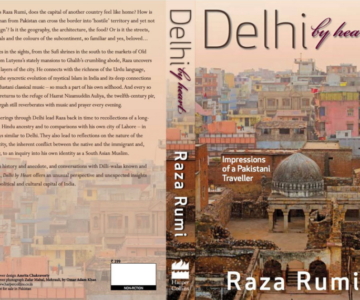
   Raza Rumi discusses a new book on Sufism by Sadia Dehlvi

Getting a visa to India is a nightmare for ordinary mortals. My application was not very politely returned last month with technical objections. It was only when a letter from Harper Collins arrived that the High Commission rather efficaciously allowed me to enter enemy territory, that too with special instructions that cantonments were out of bounds. I guess the South Asian officialdoms have yet to discover that Google Earth has permanently altered the shape of boundaries and secrecy. (more…)

Joseph’s Box by Suhayl Saadi

29 May 2009

I am sharing a message from Suhayl Saadi here: The website associated with my forthcoming novel, Joseph’s Box has been launched. There are stories – fables, one might say – tangential to, and drawing from, the main narrative of the book as well as other information. The site will develop over time. If you pre-order the books now from the site, you will get them early. Happy reading!

About the novel: Recently bereaved Zuleikha Chashm Framareza MacBeth wades into the Clyde one morning and recovers a large box, with which she becomes obsessed. The discovery brings her together with Alex, a lute-playing clerk, and they manage to open the box – only to find six more boxes inside, each of which can be opened only by following a cryptic clue. The clues lead Zulie and Alex on a physical and emotional journey, modulated through music, across Glasgow, Argyllshire, Lincolnshire, Sicily, Lahore, and finally the frozen peaks of the ‘Roof of the World’. Meanwhile Zulie, a troubled doctor, has been sucked into the vortex of the terminally ill Archie MacPherson, an ambivalent, visionary Second World War airman and Glasgow shipyard worker. In the manner of a lord of misrule, Archie’s dying consciousness begins to shape and ultimately define Zuleikha and Alex’s quest as they progress through the seven Sufi stations of sacrifice, truth, power, obedience, life, memory and beauty. Drawing on a wide framework of cultural and spiritual reference, uniquely blending contemporary Western literature and traditional Arabo-Persian storytelling, this is an extraordinary and ambitious novel with a visceral sensuality and subtle touches of magical realism, in the vein of Okri, Murakami and Pamuk.

ISBN 9781906120443; trade pbk 216x138mm (with coloured endpapers); 688 pages.Joseph’s Box will be available on publication date as an e-book via this website and the publishers’ website only.

Review of Wahhabi Islam (Natana DeLong-Bas)

22 May 2009

Natana DeLong Bas’ Wahhabi Islam: From Revival and Reform to Global Jihad is not a bad book, but it is not a particularly helpful book either. One of its strong points is how adroitly DeLong-Bas eases the reader into topics. This is no small feat since the protagonist is Muhammad ibn Abdul Wahhab (d. 1792) , a controversial Shaykh who lived during the eighteenth century. The reformer made an alliance with Muhammad ibn Saud, ruler of a small market town Diriyya, and this led to the formation of a state which claimed to live under the guidance of the Shariah and tried to bring the pastoral tribes all around it under its guidance too. More than I care to admit, the book was a page-turner for me, in spite of its moderate heft. 

However, the simplicity comes at a price. The narrative, especially when it discusses Shaykh Ibn Abdul Wahhab, is afflicted by a linearity that becomes unconvincing after a while. The book proves incredibly readable throughout, but the one-dimensional character that DeLong-Bas chooses to maintain for the Shaykh quickly becomes a cartoon superhero- too good for his own good, so to speak, and quite unbelievable. (more…)

Slippery Stone: An Inquiry into Islam’s Stance on Music – Reviewed by Dr. Mahmood Ghazi

21 May 2009

Review by Dr. Mahmood Ghazi

Title: Slippery Stone: An Inquiry into Islam’s Stance on Music

Author: Khalid Baig

Publisher: Open Mind Press

Year: 2008

384 pages.

Slippery Stone: Cultural Colonialism and the Music Question

The dawn of the colonization of Afro-Asian world in general and the Muslim world in particular brought in its wake efforts by the western academia to justify colonization in a variety of ways. (more…)

Another Incarnation

10 May 2009

By PANKAJ MISHRA (NYT) reviews an interesting book that I must read.


THE HINDUS

An Alternative History

By Wendy Doniger

779 pp. The Penguin Press. $35

Visiting India in 1921, E. M. Forster witnessed the eight-day celebration of Lord Krishna’s birthday. This first encounter with devotional ecstasy left the Bloomsbury aesthete baffled. “There is no dignity, no taste, no form,” he complained in a letter home. Recoiling from Hindu India, Forster was relieved to enter the relatively rational world of Islam. Describing the muezzin’s call at the Taj Mahal, he wrote, “I knew at all events where I stood and what I heard; it was a land that was not merely atmosphere but had definite outlines and horizons.” (more…)

The Battle over Hindu History

9 May 2009

Author Wendy Doniger, Professor of the History of Religions, University of Chicago’s Divinity School , writes on this blog about her new work. This new work further consolidates the view that much of the now politically packaged Hinduism was actually a product of colonial scholarship in the ninteenth centruy.

The Battle over Hindu History

For years, some Hindus have argued that the 16th century mosque called the Babri Masjid (after the Mughal emperor Babur) was built over a temple commemorating the birthplace of Rama (an avatar of the god Vishnu) in Ayodhya (the city where, according to the ancient poem called the Ramayana, Rama was born), though there is no evidence whatsoever that there has been ever a temple on that spot or that Rama was born there. (more…)

New book: Wanted—Equality and Justice in the Muslim Family

8 May 2009

Reviewed by: Yoginder Sikand

Muslim family laws have for long been—and continue to be—a hugely controversial subject. Critics contend that these laws seriously militate against basic human rights, especially of women. On the other hand, conservative ulema and Islamist ideologues hail these laws as the epitome of divine justice and refuse to consider any changes therein. (more…)

« Previous PageNext Page »