India

A beatific vision – Nizamuddin Auliya

12 July 2010

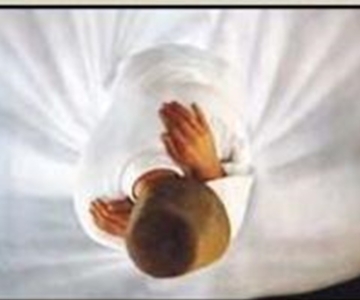
There is something unique, almost magical about this place. Otherwise a tiny space in the sprawl of urban Delhi, Nizamuddin’s shrine means a lot to me. My five years old relationship with this corner of a tumultuous globe is source of strength, peace and a connection with a bygone age.
The sad part is that I never get enough time to be there – just to sit and muse – do nothing. Even taking pictures is such a burden in a place where you want to let go – and be yourself, without any need, ambition, desire or a deadline.
When will I visit next? A question that lingers in my mind each time I am leaving this place. Wish the visa hassles were not there. But they are real and so am I.

Azad Jammu & Kashmir – Ruling from Islamabad

14 June 2010

Silence on Azad Jammu & Kashmir in the Pakistani mainstream, other than the juicy breaking news, is a tacit acceptance of the marginalization of this area

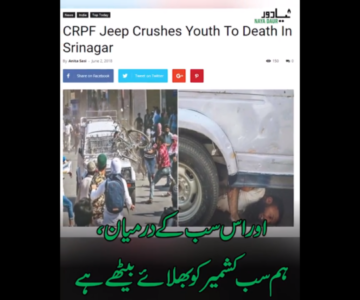
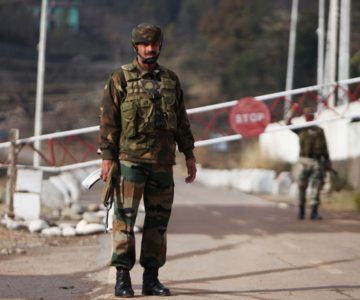
Arundhati Roy has been exposing the brutalities of the Indian State in the ‘occupied’ Jammu and Kashmir. She has questioned the presence of over half a million Indian troops and the naked violations of human rights there. Roy’s the lone domestic voice that has earned the ire of the patriots and nation-state parrots. In Pakistan, we face a dilemma whereby commenting on the status and predicament of Azad Jammu and Kashmir (AJK) remains a forbidden territory. Any discussion on AJK has to locate itself within the narrow confines of the Partition mess. This is why a zone with ambiguous citizenship continues to exist next to the Islamic Republic of Pakistan.

The current government has accorded a quasi-provincial status to Gilgit-Baltistan but the state of AJK like its other strategic sibling, the federally administered tribal areas (FATA) is quite low on the national agenda. Indeed, the national security doctrines inform such discussions and leave little option for introspection, let alone deliberating policy shifts.  Ostensibly an autonomous state government exists in AJK with institutions of governance but their remit and outreach are limited. If anything, Islamabad is the real capital. Ironically, both the Indian and Pakistani states despite their rhetoric and habitual one-upmanship display the worst characteristics of their original cast – the colonial apparatus that constructed fragile and unsatisfactory notions of citizenship. (more…)

Step across this Line

11 May 2010

Quite a readable piece published by CARAVAN- thanks to Fizza Ishaq for sending me the link

AS MUCH AS SHE MAY HAVE wanted to, Bani Abidi couldn’t be there for the opening of Resemble Reassemble, the exhibition of contemporary Pakistani art on display at the Devi Art Foundation in Gurgaon. In fact, the Delhi-based Pakistani artist could possibly be arrested if she were caught entering the region. Though barely a 40-minute ride from Delhi, Gurgaon is in Haryana, forbidden territory for many like Abidi. Current visa regulations grant her entry into only one state. (more…)

The golden voice of Asha Bhosle (2008 concert in LA, USA)

20 March 2010

NPR has featured Asha Bhosle (12,000 songs and the greatest of Bollywood divas) and her fabulous voice – this is what the text has to say (full article here and recording at Los Angeles on Ashaji’s 75th birthday)

Asha sang naughty songs, and she had somewhat of a naughty personality, and she had a personal life that also had some naughtiness in it — the fact that she had run away from home and divorces and marriage and all of that.”

Bhosle made the vamp her specialty, and “Dum Maro Dum” is one of her most famous songs in that persona. It was written by composer R.D. Burman, who not only worked extensively with Asha Bhosle, but also married her. Burman took advantage of Bhosle’s vocal versatility and created songs for her that brought Western musical influences to Bollywood — combining, say, congas with tablas, or finding some of the grooviest psychedelic rock sounds. If anything cemented her reputation as a bad girl or turned people on, it was this song, writer Lavanya Shah says. (more…)

A red card for the Secular Indian Muslim

14 March 2010
I am posting a brilliant piece (published by Indian Express) by my dear friend Rakhshanda Jalil - she is a bold yet sensitive writer based in Delhi. All power to her pen.

The controversy regarding the conferment of Qatari nationality upon M.F. Husain — and his acceptance of it — has given us the opportunity to revisit an old but neglected debate. The debate on being an Indian Muslim or a Muslim Indian is old hat; but the one concerning the “secular Indian Muslim” — the SIM? — needs our urgent attention. Those who doubt the existence of such a breed and view it as a contradiction in terms would do well to remember the legacy of a long line of distinguished people, from Mirza Ghalib, Hakim Ajmal Khan, Dr M.A. Ansari, Maulana Azad, Dr Zakir Husain to M.F. Husain, to name just a few. Then there are the nameless millions — doctors, lawyers, writers, journalists, teachers, wage earners who are living proof of Indian secularism. Husain is simply another link in this ganga-jamuni chain. He needs to neither establish his credentials nor protest his innocence; his work speaks for him.
Having established the credentials of this breed, let us set out the contours of its present dilemma: one, it exists in sufficiently large numbers to have escaped our notice yet, oddly enough, has never managed to establish a public profile for itself; nor has it, given its numbers, translated into a sufficiently large, and therefore woo-able, vote bank. Two, despite its largish presence (I imagine roughly half the population of Muslims in India), the breed is under severe threat.
One is not interested in establishing the presence of the SIM, for that one takes as a given. It has always existed in the weft of the Indian tapestry as the warp that runs alongside. In fact, what ought to concern us is the threat to its existence. That this threat is (more…)

Kaifi & I

1 March 2010

Shabana Azmi reads from her mother Shaukat Kaifi’s memoirs at the Jaipur literary festival. The segment was introduced by Urvashi Butalia
Presented by DNA

Jaipur Literature Festival 2010 from Dreamcast India on Vimeo.

Jaipur, Faiz and Ali Sethi

14 February 2010

Ali Sethi recently attended the Jaipur literary festival and his extraordinary performance is now accessible to those who were not there. I should thank him for sharing this video. Ali’s instructions were also meticulous but I will not post them here except his concluding comment: the whole of the rest of the session is fantastic, and includes an excellent performance by Shabana Azmi as well as a very funny story told by Javed Akhtar about his first meeting with Faiz Sahib..

Click and enjoy!

Jaipur Literature Festival 2010

No priests needed – search of a Pakistani identity

27 January 2010

Raza Rumi  wonders why we remain in search of a Pakistani identity

Half-truths are what we love to indulge in. One of the countless crimes committed by President Asif Ali Zardari is that he wears a Sindhi cap instead of a Jinnah cap. That by preferring a Sindhi topi and thundering at the occasion of late Benazir Bhutto’s death anniversary, he undermined his Pakistani identity, is truly mystifying. After all, what is a Pakistani identity and why is the Jinnah cap being elevated to the level of an article of national faith?

If anything, Mr Jinnah’s patronage of Muslim identity mark was an afterthought. His usual attire was a well-tailored pucca-sahib-like suit. It was only in the nineteen forties and that too close to India’s independence that Mr Jinnah started donning the Muslim nobility’s attire.

So what is this fuss all about? Constructing Pakistan’s ideology based on theological interpretation of a universal religion like Islam has been a carefully executed project of the Pakistani establishment and its shadows in the non-state domains. Such cliques have grown bigger, mushroomed and are now essential to our lived reality. Therefore lambasting of Zardari on not sporting a Jinnah cap finds public resonance and broad acceptability within the populous Punjab province where the Urdu press flourishes and finds readers and writers aplenty. (more…)

Folklore sans frontiers

22 January 2010

There is no alternative to peaceful coexistence within South Asia, says Raza Rumi

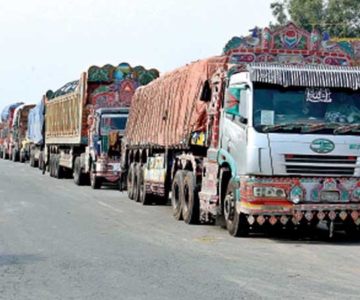
As we crossed the blood lined Waagah, after three hours of soul-destroying bureaucratic tangles and multiple forms filled in by the guardians of our borders, nothing changed. It was an eerie reminder of how the two Punjabs are but one. The roads were dusty and rural life remains as time-warped as ever. The street vendors were selling dirty, unhygienic food items wrapped in a thick cover of flies; and the money changers and CD-sellers attacked you with a frenzy that one is used to back home.

I was part of a delegation from Pakistan that was driving to Chandigarh to attend the SAARC folklore festival organized by Punjab’s legendary writer Ajeet Caur. This was a motley crew: ten Punjabis of various stripes, and five Sindhis who have travelled all the way from Bhit Shah to Lahore. We were greeted with garlands and the usual Punjabi warmth by our hosts at the border. This was my first trip to India via land or, as they say on visa forms, “on foot”. One could not escape the strange sensation of striding across a “hostile” frontier. (more…)

Maulana Azad’s interview given to Shorish Kashmiri, 1946

27 November 2009

I was intrigued by this interview of Maulana Abul Kalam Azad given to the famous journalist Shorish Kashmiri for a Lahore based Urdu magazine, Chattan, in April 1946. This interesting document has been discovered and translated by a former Indian minister Arif Mohammad Khan. Covert Magazine and newageIslam website have recently published it. The contents of this interview are difficult to agree with. Azad is speaking from a nationalist angle, anti-Pakistan movement platform.

However, the narrative has some interesting observations and predictions for Pakistan that cannot be rubbished simply because Azad was a Congressite. This interview was conducted over a period of two weeks (parallel to the proceedings of the Cabinet Mission) and has not been documented in any book except that of Kashmiri’s book on Abul Kalam Azad, which has been out of print for decades. Its discovery is a welcome step towards better historiography on both sides of the border.

Q: The Hindu Muslim dispute has become so acute that it has foreclosed any possibility of reconciliation. Don’t you think that in this situation the birth of Pakistan has become inevitable? (more…)

SOUTH ASIA: The Ties that Bind: Artists, Writers Forge Peace

21 November 2009

By Irfan Ahmed

CHANDIGARH, India, Nov 18 (IPS) – Imagine writers, scholars and folk performers from eight South Asian countries coming together to share their common heritage and culture while promoting peace and harmony at the same time.

That is precisely what 200 members of the South Asian Association for Regional Cooperation (SAARC) did early this month, prompted by a collective aspiration to pursue their common objectives.

The move—which took place in this city—was deemed highly significant in a situation where the political leaderships of these states had been unsuccessful in making any major breakthroughs towards peace. (more…)

The Alchemy of Identities

20 November 2009

This is such a fine piece by Abdullah Khan- thoroughly delightful and thought-provoking. There is an underlying unease through the text and a hint of sadness but the tone remains curious, optimistic and wondrous. I am so happy to have found this, thanks to author’s message via Facebook…(Raza Rumi)

In 1996, a day after India’s fantastic win over Pakistan in the Cricket World Cup Quarterfinal, I was sitting in the offices of a leading English daily in Patna, the capital of the northern Indian state of Bihar. At that time, I used to be a freelance contributor to this national paper’s local edition. The paper’s features team and I were, of course, discussing cricket. Everybody was trying to guess which strategy the Indian team would adopt against a resurgent Sri Lankan team in the semi-finals.

All of a sudden, the discussion meandered to a new topic: is it true that every Indian Muslim secretly cheers for the Pakistan Cricket Team? Later, a more specific question was thrown at me by one of the sub-editors: “Tell us what’s more important to you, being an Indian, or being a Muslim? If you had to decide between one or the other, which one would you choose?” (more…)

Blogging without borders

16 November 2009

My piece published by the Walkerly Magazine

The internet has demolished the iron curtain between Pakistan and India almost overnight, writes Pakistani blogger and writer Raza Rumi.

I don’t need to tell you about the multi-billion dollar enterprise that is the animosity between India and Pakistan. Suffice to say that the birth of a new nation-state on the Indo-Pak sub-continent was among the bloodiest of all time, entailing the migration of nearly 10 million of the wretched of the earth who had to find a new home.

Millions of deaths and three wars later, the bitterness refuses to go away and the interaction of the two countries’ populations has been very limited over 60 years. As a result, not all Pakistanis have the privilege of visiting India. I happen to be one of those who, by sheer coincidence, have been visiting India primarily for work or cultural exchange.

My forays into journalism coincided with my alter ego as a blogger. Purely by accident, I discovered the world of blogging, driven by the desire to post my pieces published by The Friday Times (TFT), a weekly Pakistani magazine. Trying to avoid creating a paid website, the blog template came to my rescue. (more…)

Old boys’ homecoming

14 October 2009

Sumegha Gulati, Hindustan Times – October 10, 2009
Humayun Khan, 77, stood outside the imposing mahogany doors of the Irwin Hall inside Bishop Cotton School (BCS), Shimla, his crinkled old eyes darting around, as if trying to remember the last time he was here 62 years ago. The door, its huge brass knobs polished to a fine gold, was shut.

It had been shut since 1947 to mark the evacuation of Khan and 41 other Muslim students for Pakistan, to keep them safe during the post-Partition riots that engulfed the country. (more…)

Shamshad Begum

24 September 2009

Dr. Visho Sharma

In keeping with the promise made by me while writing the mail on Shri Dushyant Kumar, I am here again with a piece of information on the legendary singer Shrimati Shamshad Begum. It was decades ago that the gifted crooner decided to call it a day and lead a private life away from the glitter of the film world. She has seldom been heard of as a person ever since, though her songs continue to be an important part of the Hindi film music lexicon even today. It was, however, a big (and a very pleasant one, too) surprise to find a very well documented article on the media shy artiste in the September issue of the Hindi magazine Ahaa! Zindagi.

The writer of the rare article Shri Rajeev Shrivastav met the affable singer in her Mumbai home and recorded for the posterity many hitherto unknown facets of the life of one of our most admired, and yet least covered, female playback singers. It is a matter of great satisfaction that she was conferred Padma Bhusahn. This gesture, though too late (more…)

« Previous PageNext Page »