Peace

Violence: targeting the lamp of Chishtiyan

11 October 2007

Agar Gaiti Sarasar Bad Girad,
Chiragh-e-Chishtiyan Hargiz Namirad

If the entire universe is devastated by the storm
the lamp of Chishtiyan shall not cease to illuminate

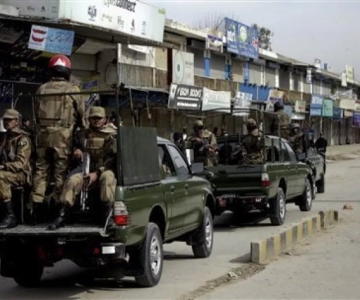
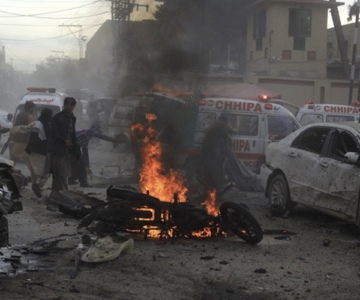
Just as Eid announcement was made in this part of the world, the sad news of bomb blasts in India were splashed all over TV channels. In particular, the blast in Ajmer Shareef – opposite the dargah – was shocking. Despicable and pusillanimous!

How could the enemies of peace target a shrine that is above the Muslim/Hindu and other formal identities. Ajmer is the fulcrum of a Sufi practice and represents the broad spiritual, syncretistic consensus in South Asia.

The reaction of authorities was quite predictable as if an automated, pre-recorded message was ready with the officials:

Union Home Ministry sources in Delhi said it was a terror strike in which militants had used a low-intensity improvised explosive device.

They said the terror outfits, including Pakistan-based Lashkar-e-Taiba, were against Sufi Islam and they could be prime suspects behind the blast which came barely 10 days ahead of the meeting of Indo-Pakistan anti-terror mechanism here on October 22…

However, the latter has some validity as we have a track record whereby the extremist elements always resist any progress towards the much needed peace – Let us not be daunted by this cowardice.

But this is so so sad. Though in the words of the devotees:

Ilahi ta-abd-astana-i-yar-rahe
Yeh-asra-hai-gharibon-ka-barqarar rahe

Oh God, may this Shrine of the beloved exist till the last day
may this refuge of the poor remain forever!

Anyone listening?

28 August 2007

Thanks to my friend Temporal, I had a chance to read this account of contemporary Pakistan – The diary of a border crosser – authored by Rehan Ansari published by DNA. This piece highlights the recent developments in Pakistan and the major shifts underway.

My stints in Pakistan should have made me a believer in the coming revolution, instead I developed a knee jerk teary-eyedness when listening to revolutionary Faiz.

Admittedly, the article is woolly and rambles, but it does present an upbeat picture of contemporary Pakistan. It ends with advice to the Indians to change their visa policy and help the ones struggling for democracy in Pakistan.

Welcome, you and your pals come and go as you like,’  should be India’s birthday gift to these Pakistanis. Happy Birthday, we acknowledge that you have arrived.

Great advice but here is what I had to say on the article that:

..competently presented the changing contours of Pakistani society and its inherent dynamism – a free media and rising middle class are accelerating the emergence of a “new” Pakistan.

Hope someone is paying attention to this in India, not least the media that still has to shed its acquiescence to the bureaucratized worldview of the Indian establishment, and global constructs of Jihad, burqas and terror sold as journalism.

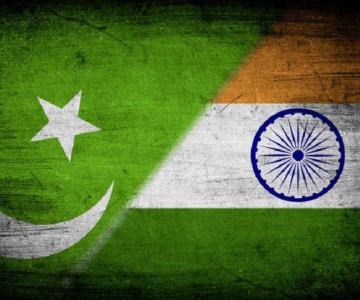
Healing the wounds of Partition ..

20 August 2007

I read this interesting, albeit a little contentious, piece by  Ravinder Kaur that examined the impact of partition on settling the communal question. The article states:

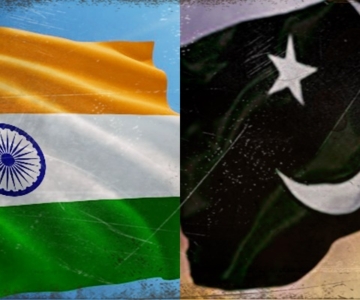
The sixtieth anniversary of the independence of Pakistan and India on 14-15 August 2007 has prompted official celebration in both countries, as well as an ocean of commemorative coverage in the world’s media. The terrible violence that accompanied the birthpangs of the two states from the ashes of empire is an inevitable theme in much commentary. What is being less addressed amid the profusion of human stories – and what this article considers – is whether the problems of communal division in the sub-continent were or are best addressed by the partition of territory.

The recent weeks have seen a splurge of such discussions in the media (including the new media) that attempt to re-examine and explore the partition of India. In particular, the sufferings of millions who crossed the line have yet again come to light.

Another reflective piece that I discovered is “pain of partition” that recounted the sufferings of migrants on both the sides of the divide.

And today, Vidya Rao - a celebrated classical singer from India sent this petition that seeks to heal the wounds that still hurt our collective lives:

Apology Petition

Dear Victims of the Partition-related Violence in South Asia:

The mass murder, rape, pillage and suffering that accompanied the partition of British India in 1947, have left deep scars on the psyche of the people of India, Pakistan and Bangladesh, the former East Pakistan.

Tens of thousands were murdered, raped, and maimed, and millions were displaced in an immense human tragedy, that continues to poison our discourse, and feed mutual suspicions and hatreds.

Therefore, we, the members of the Association for Communal Harmony in Asia (ACHA), and others, who have signed below, believe that the time has come for all of us jointly to condemn, without distinction, the insane orgy of violence and intimidation that accompanied the great human divide of 1947.

On the 60th anniversary of the Independence of India and Pakistan, we recall that dark chapter in our history so as to ensure that these tragedies will not be forgotten, or repeated.

We hope that coming generations will learn from this man-made calamity, and turn away from divisions based on religion, ethnicity, language, national origin, caste, or creed.

Taking lessons from history, we undertake to shun the political use of religion and communalism.

We regret that our forebears, the colonial British administration, and the successor governments did not prevent the tragedy. They also failed to punish the perpetrators, and apologize to you and your families.

In the spirit of harmony and goodwill among the people of South Asia, and to help build a new South Asian present and future, we grieve for and with you. We offer our deepest sympathies and most solemn regrets to you and your families.

We are sorry!

This petition can be accessed here and those interested may like to sign it. I know the prevalent cynicism about such online petitions, but long journeys begin with small steps.

We have a barricaded road ahead – let’s aim to tread this difficult path.

Shah Abdul Latif Bhitai

18 June 2007

If you are seeking Allah

If you are seeking Allah,
Then keep clear of religious formalities.
Those who have seen Allah
Are away from all religions!
Those who do not see Allah here,
How will they see Him beyond?

Let us go the land of Kak
Where love flows in abundance,
There are no entrances, no exits,
Every one can see the Lord!

There is no light nor day
Every one can see the Lord!
Those who love the Lord
The world cannot hold them.
Palaces do not attract them,
Nor women nor servants
Nothing binds them:
The renouncers leave everything behind.

A message came from the Lord:
A full moon shone
Darkness disappeared
A new message came from the Lord:
It does not matter what caste you are
Whoever come, are accepted.

Where shall I take my camel,
All is Light…
Inside there is Kak, mountain and valley,
The Lord and the Lord: there is nothing but the Lord.

(translated from Sindhi by D. H. Butani)

Legacy of Shah Latif is a recent book on Bhitai’s life and works. In a recent book review, Anwar Abro writes:

“Two and a half centuries after his death, the celebrated Sindhi philosopher-poet Shah Abdul Latif Bhittai (1689-1752 AD) continues to inspire and influence the lives and activities of the peace-loving mystic souls of Sindh. Intellectual activities, social, political or ideological discourses are considered meaningless without the recitation of his poetry. Shah Latif has become an essential part of the day-to-day life of the people of Sindh so much so that everyone wants to find out more about his life, his principles and beliefs and discover the true interpretation of his mesmerisingly meaningful poetry…”

read more here

Picture above right is courtesy Himal Magazine

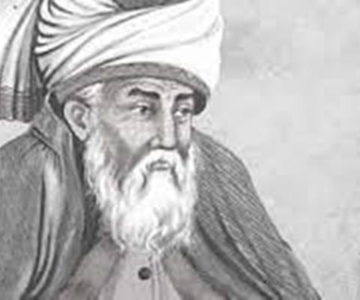
Once you conquer your selfish self – Rumi

14 April 2007

Full entry here >>

Mohsin Hamid on Indo-Pak perceptions

6 April 2007

Hamid thinks that India is more jingoistic than Pakistan. There were some interesting moments in the interview as the quote below indicates. Full entry here >>

Stop the War Petition

3 March 2007

Homeyra Ettehadieh from Iran has requested to sign the Stop War on Iran petition, “for whatever its worth”

No it is not worthless and I am sharing this with the visitors of this blog. War is simply unacceptable. It solves nothing..

Visit http://stopwaroniran.org/ to sign the petition. Also visit this link for more information.

Surveys show that Pakistanis (and Muslims) reject “terrorism”

24 February 2007

The Daily Times Pakistan has published a story on surveys carried out by various organizations. The results are quite revealing not least for Pakistan.

Pakistani liberals would need to change their view that it is a society heading towards extremism and the Jihad-flaunting Islamists would be upset that they are not supported by an overwhelming majority. Most importantly, the global media barons would also be left bewildered as their spin-doctors and experts have been, to a great degree, proven wrong!

Read more >>

Abu Ghraib Horrors by Botero

23 February 2007

Came across the chilling works of Colombian artist Fernando Botero last night. A friend at Berkeley University forwarded me this link that led me to the moving images of the recent paintings by Botero called Abu-Ghraib

Botero, 73, is the modern master of Latin American art. His cheerful magical-realist paintings are well-acclaimed in the West and feature in major museums such as the Metropolitan Museum of Art in New York City.

Read more here >>

“Seeds of peace on cricket field”

21 February 2007

Saw this insightful piece by a Pakistani researcher in the Baltimore Sun.

Read more >>

Lies, Half Truths and Deceit

21 February 2007

There is talk of war again. There is a familiar web of lies, half-truths and deceit. As if the smouldering cities and dying civilians in Iraq were not enough to quench the blood-thirst, the global war machine now wants another victim. Full entry here >>

Friendship Train Blast – Derailing the peace process (yet again)

19 February 2007

Blast kills 67 on India-Pakistan friendship train PANIPAT, India, Feb 19 (AFP) At least 67 people burned to death after a blast aboard a train from India to Pakistan that officials said Monday was intended to damage the peace process between the two neighbours. Article here >>

Hazrat Ali’s letter – testament of human rights and equality

19 February 2007

Ali bin Abi Talib, the fourth Caliph and son-in-law of the Prophet Mohammed, wrote a long letter of guidance after appointing Maalik al-Ashtar to be Governor of Egypt.

Read entry here >>

Bridging the Divide – “Ham’Asar Urdu” from Denmark

13 February 2007

We remember the Danish Cartoons controversy and the reaction it evoked across the Muslim world. I was pleasantly surprised to find out about this amazing treasure of a website that also happens to be perhaps the first on-line Urdu journal of its kind.

The journal is called Ham-Asr (contemporary) Urdu edited by Huma Nasar & Nasar Malik. In its introduction the website states:

“URDUHAMASR.DK , is an internet magazine of studies in URDU & DANISH literature, is aimed at URDU-readers who are not familiar with Danish language but would like to read its literature.  URDUHAMASR.DK  provides them large varieties of Danish literature  translated into URDU. ”

“URDUHAMASR.DK  is also intended for those who, prefer to retain their link with their heritage language URDU. Urdu is a beautiful language of the Indo-Pakistan Sub-continent, and its literature is rich and vast, comparable to those of the few better known modern languages of the World . On the other hand the study of the Danish literature  translated into Urdu can in itself be a rewarding act, regardless of the reader’s orientation. Like Urdu, Danish is not only a language, it is a culture.”

Read more here

The website has several Danish short stories and poem translated into Urdu.In particular, the Danish writer Hans Christian Andersen (1805 – 1875) famous for children’s stories finds a special place here.

This is a remarkable effort and deserves to be commended. This also proves that not all of [Pakistani] Muslim diaspora is an inward looking, gun-friendly community out to ‘destroy’ the West as Fox news would make us all believe.

Literature, with universal relevance and appeal, has an important role in bridging divides in the fractured world we live in.

Picasso’s Guernica – Timeless relevance

11 February 2007

Picasso’s Guernica is an immortal mural painting. It shows the horrors of the war in a timeless fashion.

More from David Hart’s amazing website on this great mural:

Spanish painter Pablo Picasso painted mural (1937) of bombing of Basque city of Guernica by German airforce during Spanish Civil War. Depicts victims of war, suffering women, children, and horse. Perhaps greatest painting about war ever made. Focuses on victims. Timeless and universal in its themes.

And now further details on the mural, again from David Hart’s website:

Scene takes place in darkness in open space, possible town square surrounded by burning buildings.

Figures within the triangle: the central pyramid

Tip of triangle “eye” of electric light globe (image of sun/eye) and woman with the lamp (light holding darkness/bull at bay) – the woman with the lamp

To right burning building with falling woman (perhaps also burning, in stance of suffering Mary Magdelene) – the falling woman

To left wailing woman with dead baby (originally on ladder, like bringing Christ down from the cross) behind which stand bull (threatening or protecting woman and child?) – Far left – bull, woman and dead child

Other figures are bird (rising or falling, originally small winged horse/soul) and flower (symbol of regeneration and hope, like 600 year old tree left standing) – Detail of the Flower

Thank you David Hart for such an amazing website and its contents

« Previous PageNext Page »