Monthly Archives: May 2007

Jal gaya tha ik roshniyon ka shaher

16 May 2007

Aggrieved by the recent sinister, senseless violence and brutal murders in Pakistan, this is my feeble attempt at poetic expression. I have also trans-created this Urdu poem below titled Adrift.


Jal gaya  tha ik roshniyon ka shaher
Bujh gaye kitnay jaltay aur adh-jalay chiragh
Magar kotwaal-i-shaher ne mur kar na dekha


Jism kis ka, khoon kahan aur maut kaisee?

Yeh qatl na tha dosto
Yeh qatl hai ik ehad ka
Yeh nohaa hai insaniyat ka

Insaniyat ka khatma karnay walay jantay nahee
Insaan marta hai – bhujta nahee

Ahle-hawas aur ahle-dil
Huay sab ke sab, aseer-i-shab-i-siyah

aur ham
roshniyon ke muntazir
bhujtey jugnoo-on ko dhoondtay
thakay haray

gharon ka rasta bhool gaye

Adrift

Once a city of lights, stands ruined
Lamps – lit and half-lit, all extinguished
And the guardians of the city, unmoved

Which body, what blood and whose death?

This was not a murder my friends
This was the murder of our times
A prolonged elegy of humanity

Those hell-bent on erasing humanity, are, unaware
Man dies but cannot be lost

The bleeding hearts and the hearts with no remorse
All trapped in the darkness of the night

And we the forlorn
Wait for the light
Attempting to seek dying fireflies
Tired, exhausted

Lost on our way home…

By: asmaa bilal

16 May 2007

i must offer my words of thanks and gratitiude. it was by a sheer chance tht i came by this blog yesterday. i was looking for some of allama iqbal’s snaps and got logged on. but it was sheer delight. today i also visited ur site of ghalib and it delighted me equally. the backdrop and the poetry togather is simply amazing. i lost my devan of galib long ago and the sight of his verses made my day.
munzer ik bulundee pur aur hum bana suktay
arsh say peraay hota kash kay makan apna
simply elating! its a pitty tht people are nt in touch wth the native litrature anymore. i bet they are missing on so much.so keep on the good work as its crutial.
thanx for taking us out of mundane

Bulleh Shah and Abida Parveen

15 May 2007

Bulleh Shah’s timeless verse has been celeberated by several artists but it is Abida Parveen the immensely gifted singer, a bit of dervish herself, who has celebrated Bulleh’s poetry to the fullest. Perhaps in the spirit of magic and mystical abandon with which Bulleh mused and uttered these lines…

Here is something that I came across today – I have been listening to this piece for years but to see it on youtube – so easily accessible – with half decent subtitles was exciting to say the least.

And, in the state of depression that every Pakistani has been since the Karachi carnage this was even more soothing. Not that the wounds will be healed so soon.

Bravo, Abida-ji for infusing so many dimensions to this immortal poetry..

Karachi – some lines from Ibne Insha

15 May 2007

I am grateful to my long lost friend Zaman for sharing these remorseful lines from Ibn-e-Insha, the great Urdu poet and writer.

I am posting the original version in Urdu along with a maladroit translation (attempted by this author).

Meri Hasratoon ka Roma
Meri Wehshatoon ka Deli
Mera Baldia Karachi

Mujhey Aur Kon Janey
Yehi dey to dey Gawahi
Key Haseen Sooratoon say
Yahan her gali bharee thee.

Translation

The Rome of my unfulfilled desires
The Delhi of my wildernesses
My city Karachi

Who else knows me?
Only Karachi can testify
Beautiful faces, once,
lived here on every street

Image above is from here

When sorrows come ….

14 May 2007

Thought of Shakespeare while being depressed with events in Pakistan.

When sorrows come, they come not single spies, but in battalions!

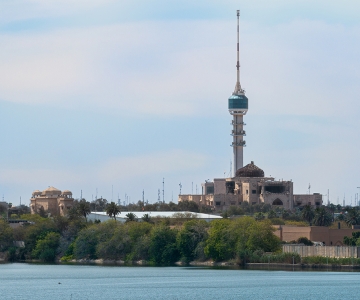
Halaku, when you will come to Baghdad this time..

12 May 2007

I feel privileged these days. There are such interesting and thoughtful friends in the blogosphere who are adding more poetry to my life. Mystic sent me Hasan Abidi’s poem in Urdu along with a competent translation.

Halaku ab jo tum Baghdad aaoge (Halaku, when you will come to Baghdad this time) is a powerful poem that invokes the historical characters of Halaku, Arabian nights and other tales to tell a sad story of present day Iraq.

The reference here is the invasion of Baghdad by Halaku Khan in 1258 that resulted in the death of over a million people and the destruction of this great city. History will treat the recent plunder of Baghdad in the same manner!

Read the poem and its translation here.

Adnan has also posted this poem and written some powerful words in the introduction.

By: Rumi

12 May 2007

Raza – What a wonderful write-up. I could almost taste the mangoes and pomegrandaes! It brought a smile to my face and a yearning to make a trip home…

Why I love Pakistan?

11 May 2007

I was asked to write about the top five reasons for loving Pakistan. I’d like to share this piece with the readers.

Why I love Pakistan? Top 5 reasons

The Civilization

Pakistan is not a recent figment but a continuation of 5000 years of history: quite sheepishly, I admit, that I am an adherent of the view held by many historians that the Indus valley and the Indus man were always somewhat distinct from their brethren across the Indus. I do not wish to venture into this debate but I am proud as an inheritor of Harappa, Mohenjo-Daro and Mehrgarh (not strictly in this order) and this makes me feel rooted and connected to my soil as well as ancient human civilizations and cultures.

It also makes me happy that no matter how much the present-day media hysteria about Pakistan (and ‘natives’ in general) diminishes my country and region, nothing can take away this heritage and high points of my ancestral culture. Pakistan is not just Indus civilization- it is a hybrid cultural ethos: the Greek, Gandhara, the central Asian, Persian, Aryan and the Islamic influences merge into this river and define my soul: how can I not be proud of this?

The People

I simply love the Pakistani people; they are resilient, diverse and most entrepreneurial. They have survived calamities, famines, upheavals, injustices and exploitation and yet, by and large, retain a sense of humour. I am not naive to say that they are totally free of the various bondages of history but they display remarkable entrepreneurial and creative potential. Most of them are ‘real’ and rooted and yet not averse to modernity.

There is an urban revolution taking place in parts of Punjab and Sindh and the drivers are neither the state nor external donors but the people themselves. The private sector has even contributed to build an airport. There is an ugly side as well: the absence or predatory activities of the state (e.g. Karachi) has also provided a breeding ground for mafias but this is not a unique Pakistani phenomenon. From LA to Jakarata, such groups operate within the folds of urbanization.

I am proud of my people who have proved themselves in all spheres and countries, whether it is Professor Abdus Salam, the Nobel Laureate or Shazia Sikander, the miniaturist of international fame or Mukhtaran Mai who has proved her mettle in giving a tough time to forces of oppression.

The Spirituality

There is an inordinate focus on Pakistani madrassahs, the pro-Taliban groups and the violent jihadis. How representative are these groups? Only Pakistanis know that such groups are marginal to the mainstream attachment to and practice of religion. The rural folk are still steeped in Sufi worldview and many versions of Islam exist within the same neighborhood. Of course there is manipulated curse of sectarian violence but that mercifully is not embedded despite the attempts of big external players and the octopus-like state agencies.

Ordinary Pakistanis, such as me, value their Islamic beliefs, are God fearing and follow what is essentially a continuation of the centuries old traditions of spirituality that survives in the folk idiom, in the kaafis of Bulleh Shah, and in the verses of Bhitai and Rahman Baba. Our proverbs, day-to-day beliefs are all mixed and laced with history, oral tradition, Sufi lore and of course Islamic simplicity. It is another matter that there are individuals who want to hijack this thread and impose their nonsense on us; but we as a people have resisted that and shall continue to do so. After all we inherited the confluence of ancient religions and practices.

Pakistan is where Buddha taught and Taxila shined, and where Nanak preached and the great saints -Usman Hajweri, Fariduddin Ganj Shakar, Bhitai and Sarmast – brought people into the fold of Islam. Despite the revisionist, constructed history by extremists in India, the sword had little to do with Islam’s rise in this region.

The Natural Beauty

Well the spirituality of my homeland is not just restricted to the intangible belief systems. It also reflects in the splendors of Mother Nature. From the pristine peaks in the north to the mangroves of the Indus delta, Pakistan blends climates, geographies, terrains in its melting pot. Within hours of leaving an arid zone, one enters into a fertile delta. And again a few more hours put you right in front of otherworldly mountains. The deserts of Cholistan radiate the moonlight and the surreal wildernesses of Balochistan are nothing but metaphors of spiritual beauty.

Where else can I experience the aroma of wet earth when the baked earth cracks up to embrace every droplet and where else can one find a Jamun tree with a Koel calling the gods? An everlasting impression on my being shall remain the majestic sunrise at the Fairy Meadows amid the Karakorams and the melting gold of Nanga Parbat peak. I love this country’s rivers, streams and the fields where farmers testify their existence with each stroke, each touch of earth. I cherish trees that are not just trees but signify Buddha’s seat or the ones in graveyards nourishing the seasonal blossoms.

The Cuisine

Yes, I love the aromas and myriad scents of Thai cooking, the subtlety of the French and Lebanese or the Turkish dishes but nothing compares to the Pakistani cuisine. Forget the high sounding stuff; ghar ka khana (homemade food) no matter which strata are you from is difficult to find elsewhere?.

Whether it is a simple Tandoor ki Roti with Achaar or Palak (in the Punjab) or the intricate Biryani with ingredients and spices of all hues, the food is out of this world. In my house, we were used to at least ten different rice dishes (steamed white rice/saada/green peas/vegetable/channa/choliya/potato Pilau), three types of Biryanis (Sindhi, Hyderabadi, Dilli or just our cook’s hybridized Punjabi version), and my grandmother’s recipe of Lambi Khichdee. The list continues.

In the Northern areas, there are Chinese-Pakistani concoctions, in the North West Frontier there is meat in its most tender and purest form. In Balochistan there is Sajji, meat grilled in earthenware at low heat until all the juices have transformed the steaks into a magic delight. And, the fruits and the sweets- the mangoes that come in dozens of varieties and colours, melons of different sizes, the pomegranates and the wild berries that still grow despite the pollution everywhere!

How could I not love this eclectic cuisine?

And Finally

the sum-total of all five: I love Pakistan as this is my identity – immutable and irreversible. Simple.

The genesis of this post:

I am averse to the ratings and rankings that characterize the junk-journalism of our times. Much like the embedded style of reporting such a view remains partial and often ignorant of the nuances and layers of subtext that are almost unachievable in the pop-view of the world.

Readers might question this apparent paradox as on the one hand I am participating in this top-five series and on the other I am also being critical. Well, well this is kosher from a South Asian perspective as we remain a mythical-modern bundle of contradictions.

The real reason for me to ‘submit’ my top 5 is the inquiring spirit of Mayank Austen Soofi whom I don’t know and have never met. But I am quite empathetic to his efforts at understanding Pakistan. At least he ventures into the ‘other’ territory and unlike the mainstream media and writers, does not view Pakistan as a threatening collage of burqa clad women, terrorism and gun toting radicals…

Beautiful Bird

10 May 2007

I am posting Fatima Hasan’s poem Beautiful Bird that has received much international acclaim.

Read the poem here

Why I love Pakistan? Top 5 reasons

10 May 2007

The Civilization

Pakistan is not a recent figment but a continuation of 5000 years of history: quite sheepishly, I admit, that I am an adherent of the view held by many historians that the Indus valley and the Indus man were always somewhat distinct from their brethren across the Indus. I do not wish to venture into this debate but I am proud as an inheritor of Harappa, Mohenjo-Daro and Mehrgarh (not strictly in this order) and this makes me feel rooted and connected to my soil as well as ancient human civilizations and cultures.

It also makes me happy that no matter how much the present-day media hysteria about Pakistan (and natives in general) diminishes my country and region, nothing can take away this heritage and high points of my ancestral culture. Pakistan is not just Indus civilization it is a hybrid cultural ethos: the Greek, Gandhara, the central Asian, Persian, Aryan and the Islamic influences merge into this river and define my soul how can I not be proud of this? (more…)

But if you are happy…

9 May 2007

When you whirl, your eye sees the room whirling, too.
If you sail in a ship over the sea,
it seems the seashore is running past.
If your heart is oppressed with struggle,
the whole atmosphere of the world feels tight;
but if you are happy as your friends would wish,
this world seems to be a garden of roses.

Rumi
Version by Camille and Kabir Helminski
“Rumi: Jewels of Remembrance”
Threshold Books, 1996

Indus Valley Civilisation – another discovery

9 May 2007

There is more to the Indus valley civilization than we think.

“The discovery of rare objects during an excavation expedition in Cholistan desert by local and foreign archaeologists have raised hopes of presence of ruins identical to that of Mohenjodaro and Harappa.

A rare seal of copper, a terracotta block, three wedge-shaped bricks, pottery with distinct potter marks and four unicorns (a mythical animal) were dug out from the dried-out channel of the Hakra river by a team of archaeologists …”

Read full entry here

By: moyameehaa

9 May 2007

nice blog. really interesting.

M F Husain’s woes

8 May 2007

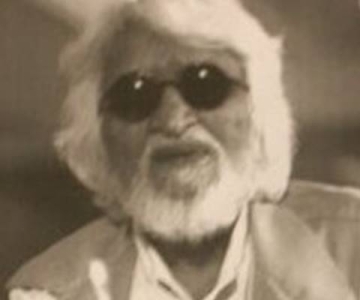
M.F. Husain, India’s best known painter is under threat from the guardians of public and national morality. This eccentric, 91 year old painter should be left in peace with his fantasies and creative outbursts.

Rightwing groups have called for the arrest of Husain, whose flowing white locks and beard, and habit of walking barefoot, have become iconic in Indian art circles.

Read the story here.

This reminded me yet again of Fahmida Riaz’s poem - Tum bilkul hum jaisey nikley.

Two striking poems by Alvi

7 May 2007

It is a pleasure to have read Pervaiz Munir Alvi’s poetry. …For now I have selected two poems – personal and profound – for this post. The first echoes what many Pakistanis (or any other diaspora for that matter) observe on their visits to the homeland…..

Read the full post here

« Previous PageNext Page »