Arts & Culture

The tragic story of Urdu

29 July 2011

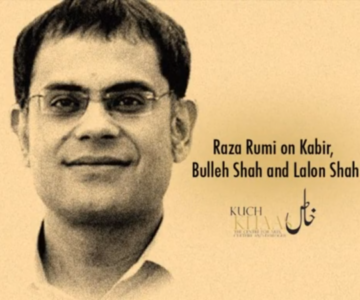
By Raza Rumi

What makes translating Urdu literature a rare indulgence has also kept it closeted from global appreciation.

Ralph Russell, the legendary British scholar of Urdu literature, whose tireless efforts to explore the Byzantine layers of Urdu will always serve as a reference point for global Urdu-walas, once summed up the eternal dilemma of achieving a perfect translation of Urdu literature into English. He pointed out that the work of Indian and Pakistani translators suffered from a lack of command in either language. “The English-knowing products of what in India and Pakistan are generally called ‘convent schools’ have acquired their nearly (but not quite) perfect English at the cost of losing full command of their mother tongue,” he wrote in 1996.

This is not to say that translations of Urdu literature have not been accomplished. In fact, there are many 20th century writers whose works have been translated by competent men and women. Key examples are the translations of the short stories of Saadat Hasan Manto and Ismat Chughtai. Their poignant and non-conformist writings have found a wide readership in predominantly English-reading Indian middle classes and western readers attempting to understand the nuances of South Asia’s literary output. The contribution of The Annual of Urdu Studies – edited by Muhammad Umar Memon and published every year from the US – has been immense in this regard. Some writers and poets whose works have been translated include Abdullah Hussein, Patras Bukhari, Shamsur Rahman Faruqi, Rajinder Singh Bedi, Ghulam Abbas, Hajra Masroor, Premchand, Qudratullah Shahab, Intizar whose contribution and devotion to the translation of Urdu literature remains unparalleled and who has provided fine examples of literary translations, leaving out no major contemporary Urdu writer. His academic journal, The Annual of Urdu Studies, continues to publish translated works from Urdu every year.

Literary magazines are a great introduction to young and fresh voices in Urdu. One can observe a constant process of experimentation in language and expression. Short story writer Ali Akbar Natiq, one of Urdu’s most important new voices, and Mohammad Khalid Toor, who is critical newly- rediscovered voice, have been introduced to readers by Urdu literary magazines. (more…)

Remembering Parveen Shakir

26 December 2010
Naveed Abbas has contributed this beautiful tribute to a great poetess Parveen Shakir who died 16 years ago. Please check her poems and their translations here and here

With a tearful eye and a aggrieved heart one is reminded of the sad fact; sixteen years have passed since Parveen had left this world for her eternal abode, the world of art and culture has missed this poetic genious immensely. The globally renowned literary ambassador is one of the rarest assets of Pakistan.
A glowing tribute to Parveen Shakir!

What is this life one really wonders?
The inexorable fate snatches what we cherish the most
The dismal heart is aching with dirge
In remembrance of great Parveen Shakir
The glittering diamond among stones
The cynosure of all eyes remembered with fertive sighs
Her name will be written with ‘everlasting ink’ on the pages of eternity

May her soul rest in peace!

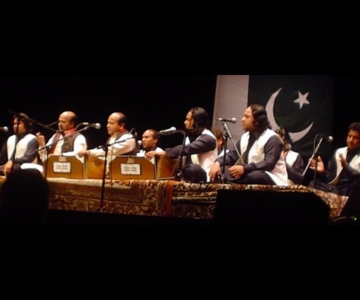
Sufi rock by an immensely talented band

19 December 2010

This video is from the band Da Saaz. Dhruv Bilal Sangari is singing and Raoul Amaar Abbas has directed, produced and shot all the trippy light

Remembering Faiz and his Culture Policy of early 1970s

21 November 2010

Today is the 26th death anniversary of Faiz Ahmed Faiz whose life and works are national assets. Faiz was a torchbearer of the glorious traditions set by great Urdu poets such as Ghalib and Iqbal. Faiz distinguished himself as a proponent of a revolutionary vision, which blended the romance of classical Urdu poetry with the idealism of revolutionary struggles. Faiz’s political ideology provided modern Urdu verse an unprecedented political and romantic expression. Faiz brought Pakistan international acclaim and the world bestowed on him the highest honours, including the Lenin Peace Prize (1962). He has also left a corpus of essays, editorials and commentaries from his years in journalism. This body of work still needs to be fully assessed for its literary dimensions. Faiz’s literary career coincided with the emergence of Pakistan and its unfortunate history of political instability and militarisation, which isolated its majority Eastern wing and resulted in its break-up in 1971. His famous poem ‘Yeh Daagh Daagh Ujala’ remains an apt comment on the creation of a ‘moth-eaten’ Pakistan, which continues to grapple with issues of identity. The Pakistani state treated him shoddily as he remained under arrest for extended periods or in exile.

The decade of the 1970s witnessed a change when Bhutto appointed him as Chairman of the National Council of the Arts. Faiz authored (more…)

On ‘The Melodious Age of Mehdi Hasan’

18 October 2010

A book review published in DAWN mentions my piece on Mehdi Hasan:

… Raza Rumi’s piece ‘The Melodious Age of Mehdi Hasan’ discusses in reasonable detail the socio-cultural impact that Khan Sahib has had on Pakistani society.

Beginning from his birth (in the town of Luna in district Jhunjhunu, Rajasthan in 1927) he touches upon the early struggling phase of his life and then, in lyrical prose, talks about the society that he is a part of and how music in particular and the arts in general are looked upon.

He writes, ‘Our greatest artists, singers, poets and intellectuals have suffered at the hands of a conformist society and state captured by puritans especially since the late ’70s.

It is never too late for the intelligentsia of this country to mobilise public pressure on the state machinery so that it learns to respect cultural diversity and the imperative to nurture a creative, healthy and civilised society.’

Showering compliments on Khan Sahib, Raza Rumi rounds off his article by claiming, ‘Miyan Tansen must be proud of his new age prodigy.’
(more…)

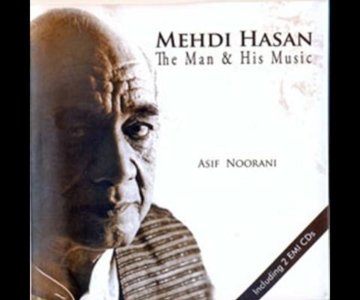
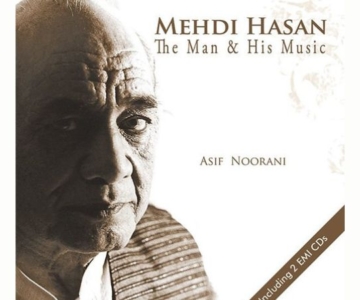
Mehdi Hasan: The Man & His Music

30 September 2010
A new book on Mehdi Hasan, originally uploaded by Jahane Rumi.

My essay on Mehdi Hasan has been published in this book compiled by Asif Noorani Saheb. This is a memorable collection of essays, reminisces and two CDs of choicest music from Mehdi Hasan. The greatest of Pakistan music icons deserves much more but this little offering brought tears to his eyes. Here is an excerpt from the essay which I will post after a permission from the publishers:

“But this has been our tragic tradition. Our greatest artists, singers, poets and intellectuals have suffered at the hands of a conformist society and state captured by puritans especially since late 1970s. It is never too late for the intelligentsia of this country to mobilise public pressure on the state machinery so that it learns to respect cultural diversity and the imperative to nurture a creative, healthy and civilised society.
Tansen taught us how music is a route to immortality. An ailing Mehdi Hasan in 2010 is fighting with death. His longevity is ensured. Tansen must be proud of his new age prodigy. “

My painting as a magazine cover

28 September 2010

KIndle Magazine , originally uploaded by Jahane Rumi.

Kindle magazine has printed an excerpt from my forthcoming travel book. I has sent them a painting of mine to be used with the text but it was a pleasant surprise to see it as a cover for the magazine. It is an impression of Sarmad’s dargah from inside.

My contribution on Dara and Sarmad can be read here at the magazine website.

Pakistan’s disaster could lead to a collapse

16 August 2010

As if Pakistan’s implosion from within wasn’t enough, the gods have acted to further push hapless and crumbling polity into a major crisis. Prior to August 2010, Pakistan was fighting a battle for its survival on an existentialist and ideological plane. The central features of a nation-state had withered away, save the institution of the Pakistan army. If anything, the insurgencies in Balochistan, FATA and Khyber-Pakhtunkhwa, and simmering discontent in Southern Punjab and Sindh had alarmed several Pakistanis and those in the international community who wanted Pakistan to be a stable state.

The colossal humanitarian tragedy and the imminent economic meltdown, will now shape a new Pakistan or rather, exacerbate its predicament in the months and years to come. Pakistan’s chronic political instability, structural economic constraints and a warped national security policy are all going to be affected by the unfolding drama of the national disaster, perhaps the severest, in the country’s history. Whilst the challenges have snowballed within a short duration of ten days, the response of the Pakistani state and society underline extremely dangerous trends and make us wonder about future of the country, as we have known it for the last 63 years.

Systemic shock:

Pakistan had reverted to quasi-democratic rule after a decade of dictatorship in March 2008. Since the resumption of the electoral process in February 2008, the traditionally powerful unelected institutions, had acquired both legitimacy and unprecedented powers. The power troika of the 1990s had transformed into a quartet comprising the army, judiciary, the media and the civilian government which was represented by a ‘discredited’ president who has been a constant punching bag for the unelected institutions of the state. (more…)

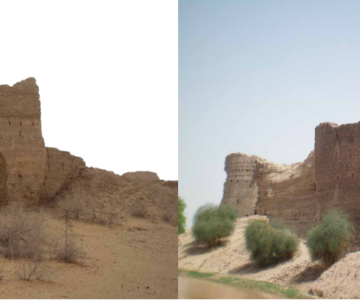
Moenjodaro might have been washed away

13 August 2010

I just read this message (pasted below) from the Director of the World Heritage Centre on impact of Pakistani floods on the Archaeological Ruins at Moenjodaro, Sindh. While millions are suffering this is also a huge tragedy. The response of the UN is a little disappointing – yet another damage assessment when water recedes. While rescue and relief efforts continue, UN must also arrange for a small team of locals to visit the area and suggest immediate and urgent measures to get something done. By no means I am suggesting that this should take precedence over saving human lives but this issue also deserves urgent attention.

In addition to their dramatic consequences for the affected people, to which the World Heritage Centre (more…)

Jammed in Delhi

12 August 2010

My first time in the enemy capital as a journo – Part One

Twenty-four hours before my departure to the enemy lands, I still had not received my visa. This time my rushed, jam-packed travel to India was a bit of an identity switch. From a development professional, a Sufi devotee and a culture-vulture, I was now a journalist representing none other than The Friday Times. Accordingly, I sat on a plane with pockets full of visitors cards and little idea of what this junket was all about.

Indeed, the peace industry across the globe is an unbroken series of junkets, high-sounding statements and admittedly a lot of fun. I was travelling with ten other Pakistani media persons: from Urdu, English, electronic and print varieties. Luckily, I knew Cyril Almeida of DAWN, our Shaukat Piracha (who also works for AAJ) and Asim Awan of Express-Tribune – there was little awkwardness in getting familiar with the group.

Between the two high profile visits of the Indian Home and Foreign Ministers this was a visit to give Pakistani media representatives access to the Indian mood and where it stood. Perhaps, an effort to forge a better understanding of what Indians were thinking and to hear of the Pakistani concerns from the non-state side. A tacit and slightly belated acknowledgement that the Pakistani media has arrived (perhaps nowhere) and has entered the power-game. (more…)

Oldest university on earth is reborn after 800 years

9 August 2010
Nalanda, an ancient seat of learning destroyed in 1193, will rise again thanks to a Nobel-winning economist
By Andrew Buncombe
During the six centuries of its storied existence, there was nothing else quite like Nalanda University. Probably the first-ever large educational establishment, the college – in what is now eastern India – even counted the Buddha among its visitors and alumni. At its height, it had 10,000 students, 2,000 staff and strove for both understanding and academic excellence. Today, this much-celebrated centre of Buddhist learning is in ruins.
After a period during which the influence and importance of Buddhism in India declined, the university was sacked in 1193 by a Turkic general, apparently incensed that its library may not have contained a copy of the Koran. The fire is said to have burned and smouldered for several months. Read the full story here

The peace process: The way forward

7 August 2010

By Subhojit Goswami

Kolkata, Aug 1: “A dialogue process is not about ‘who wins’ but about empathetic understanding”, came the strong words from Pritha Kejriwal, the Editor-in-Chief, Kindle Magazine, as she started on a solemn note with a critical evaluation of what has taken place with India and Pakistan and what hasn’t in the last 60 years. She was speaking at the Round Table organized by Kindle at the Kolkata Town Hall. The panel discussion riveted on the ongoing Indo-Pak talks and the future that we look up to.

Addressing the ongoing Indo-Pak dialogue as ‘deliberately redundant’, Pritha went on to add that there are forces existing in both India and Pakistan who have systematically instructed people to “confuse mutual hatred with patriotism.” (more…)

Why data darbar was attacked

26 July 2010

Here’s a video from wichaar. Apologies to those who cannot understand Urdu

http://www.wichaar.com/videos/dr-manzoor-ejaz/why-data-darbar-was-attacked-video_cf85bf053.html

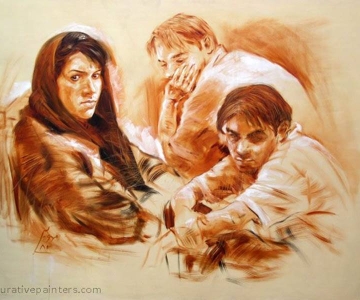
Elusive freedom – a painting by Anwar Saeed (’92)

20 July 2010

Elusive Freedom

A beatific vision – Nizamuddin Auliya

12 July 2010

There is something unique, almost magical about this place. Otherwise a tiny space in the sprawl of urban Delhi, Nizamuddin’s shrine means a lot to me. My five years old relationship with this corner of a tumultuous globe is source of strength, peace and a connection with a bygone age.
The sad part is that I never get enough time to be there – just to sit and muse – do nothing. Even taking pictures is such a burden in a place where you want to let go – and be yourself, without any need, ambition, desire or a deadline.
When will I visit next? A question that lingers in my mind each time I am leaving this place. Wish the visa hassles were not there. But they are real and so am I.

« Previous PageNext Page »